

Project

Goals

The future is not built by itself. We take responsibility for its design. Our goals are focused on a climate-adapted future by 2045 - ambitious and realistic. To achieve this, we need you

20 ha

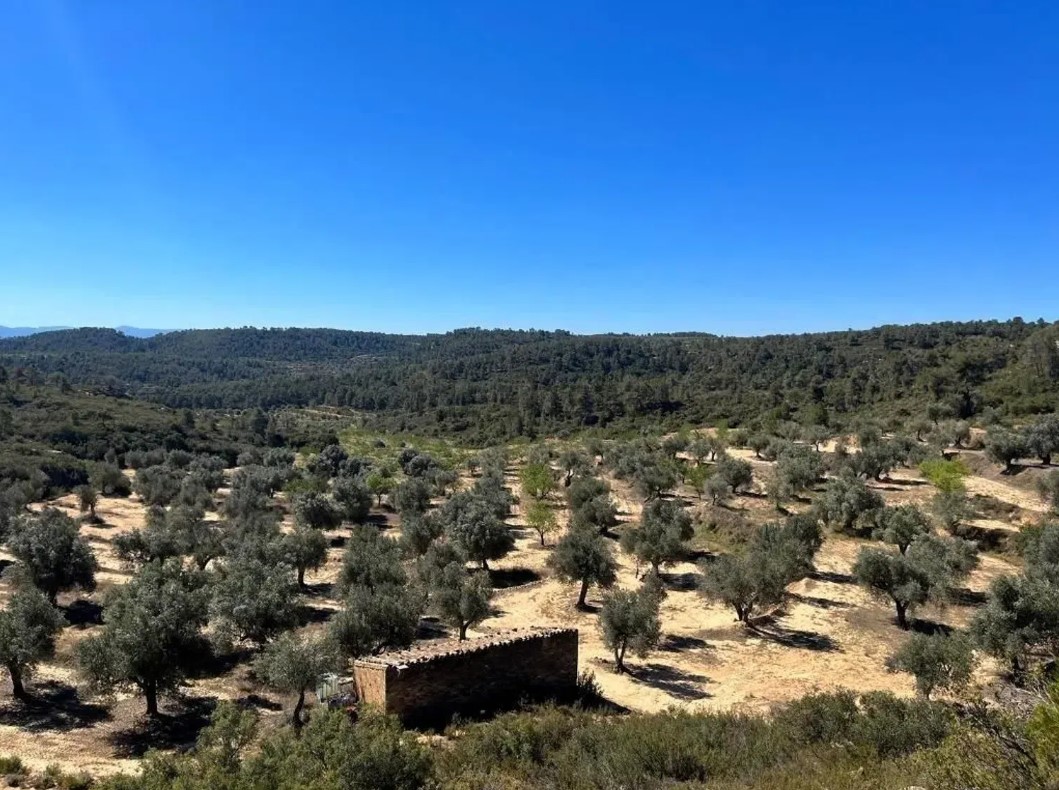
Regenerate agricultural land and transform it into edible forest gardens

20 km

Keylines for retention, water retention and water distribution

20,000 pieces

Grow plants in seven elevations and create maximum biodiversity

Future-proof

For us, being future-proof means building solutions that are sustainable in the long term - ecologically, socially and economically. We combine proven principles with modern technology where it makes sense. It's not about maximum complexity, but simple systems with great impact. This creates a model that can be implemented today and scaled up tomorrow

Regeneration

We want to transform depleted areas into vibrant, productive ecosystems. The soil, biodiversity and water cycles should be actively built up and strengthened in the long term

Learn more

Resilience

We want to create systems that function even under change. Local food, water and energy increase independence and stability

Learn more

Community

We want a place where people share responsibility and learn from each other

Learn more

Financing

The focus is on sustainably transforming the landscape and promoting biodiversity

Project start and financial security

The project starts in August 2026. The first concrete negotiations for land acquisition will take place on site

To give supporters security, a target account has been opened for this project. All contributions - whether from sponsorship, donations, building purchases or memberships - will be paid into this account and managed trustworthily

The project will only be implemented when a minimum amount has been reached, which covers the initial investment costs. This threshold ensures that water infrastructure, planning, buildings and planting can actually be realized without putting the project in financial difficulties

We aim for a realistic basic financing of 770,000 euros. This amount enables the securing of initial areas, the creation of basic infrastructure and the establishment of the pilot cluster. It is conservatively calculated and based on similar regenerative community projects in Europe

If the required sum is not reached by summer 2027, all paid-in funds will be fully refunded to the supporters. This ensures maximum security for all parties involved: no advance services and no financial obligations before the project is viable

How is the project financed in the short and long term?

This project is created step by step and is based on a secured initial financing and long-term sustainable structures. In the first phase, a basic financing is built up, which enables the acquisition or securing of areas, planning and the establishment of basic infrastructure. These funds come from a combination of private contributions, sponsorship and funding

In addition to private investments, funding is used from programs for biodiversity promotion, landscape regeneration and climate adaptation. These funds specifically support the development of ecological structures such as ponds, planting systems and soil regeneration, and reduce the financial burden of the construction phase

In the long term, the stability of the project is based on a combination of moderate sustainable tourism and the revenues from the forest garden. These revenues serve to maintain the infrastructure, further develop the landscape and secure the operation

Since we only have limited financial resources ourselves, the project is being built together with people and partners who are willing to contribute to the development through participation, sponsorship or donations. All funds flow directly into the development of the landscape, infrastructure and biodiverse habitats

The goal is a long-term stable system that can increasingly sustain itself after the construction phase and exist independently of short-term financing sources

How is the money used?
  • Planning, approvals, project coordination: 30,000 euros
    Expert planning, topographic surveys, ecological concepts and coordination of all project phases form the basis for a sustainable and legally compliant implementation

  • Land purchase: 90,000 euros for 20 hectares of land
    The long-term securing of areas enables the development of stable ecosystems and protects the landscape from short-term, intensive use. Also, permit procedures and tax contributions are part of these costs

  • Water infrastructure: 200,000 euros for ponds, storage, sewage treatment plant, pipes, pumps
    Ponds, infiltration structures and storage ensure water supply, stabilize the microclimate and reduce risks from drought and heavy rainfall. Natural sewage treatment plants ensure that gray and black water are retained in the system for as long as possible

  • Plant material and soil construction: 60,000 euros for 20 hectares of land
    Trees, shrubs and perennials form the basis of the forest garden. At the same time, the soil is regenerated and made more fertile in the long term through targeted measures

  • Construction of a residential and working building: a 90 m² building for approximately 150,000 euros
    The building will be constructed from natural materials such as loam, wood, straw and lime. It offers durable, resource-saving living spaces with low energy requirements. Additionally, there will be a holiday area for private sponsors. A composting plant, a nursery for seedlings and an energy store for project management will be required

  • Two environmental jobs secured for 10 years: €240,000
    A reforestation project takes time and a lot of work. It can only be sustainably achieved if the funding for the work is secured.

In what form can I support?

The implementation of this project is made possible by people who are willing to take responsibility and actively contribute to its development. There are various ways to support - from direct participation to financial participation in the development of landscape, infrastructure and habitats.

  • Material donations
    Direct participation through material donations, equipment, equipment rental or infrastructure support. By arrangement. The specific needs are compared in the project. 
  • Time, know-how
    Time donations, workshops, coaching, volunteer work. By arrangement. Hourly or daily rates can be defined. 
  • Simple donation
    Round contribution for free use.
    60 € supports the purchase of planting material
    300 € allows us to care for a tree for 1-2 years 
  • Membership
    Supporter: 20 € / month
    Friend: 80 € / month
    Partner: 300 € / month
  • Project-related sponsoring
    Sponsoring a pond or water infrastructure module: 5,000 - 25,000 € per pond
    Sponsoring permaculture areas: 2,000 - 8,000 € per hectare
    Sponsoring infrastructure buildings: 1,000 - 2,000 € per square meter
  • Animal sponsorships 
    Small animal sponsorship: 30 € / month


What do I get in return?

This varies depending on the level of participation. From simple updates to co-development of the entire area, many things are possible.

  • Project updates
  • Invitation to visits / planting days 
  • Help with construction / knowledge sharing / learning
  • Limited, free accommodation in the guest house (partner memberships or project-related sponsoring)
  • Participation in certain areas
  • Conceptual and strategic participation
  • Visits to the sponsors with one overnight stay per year.
Legal structure
  • Legal form: Association
  • Contact
    Zukunftsbau
    c/o Ammann-Azizi
    Pfarrhubel 2
    CH-6246 Altishofen
Bank connections

Zukunftsbau
c/o Ammann-Azizi
Pfarrhubel 2
CH-6246 Altishofen

Alternative Bank Switzerland
Postbox
CH-4601 Olten
IBAN CH72 0839 0033 9287 2000 2 

Water management

Heavy rainfall and long dry periods are increasing. Intelligent water management according to the SLOW WATER principle reduces flood risks, secures water supply and stabilizes the local climate. Water becomes the central design element of a resilient landscape.​

Retention

Rainwater is collected systematically and stored in the soil and in ponds. Landscape structures such as basins, keylines and terracing ensure that water seeps in slowly instead of flowing off.

Use

Stored water is used for irrigation, household use and fire protection. Efficient distribution systems and adapted planting concepts minimize consumption. 

Preservation

Soil building, shading and closed cycles reduce evaporation and losses. Wastewater flows into plant clarification systems and is reintegrated into irrigation cycles. Water remains in the system for as long as possible and maintains the productivity of the landscape.

Successful examples of socially supported revitalization projects EU​

Montado Freixo do Meio, Portugal

This is one of the most well-known sustainable agriculture models in Europe. The community implements sustainable agroforestry and permaculture systems on approximately 600 hectares. They integrate trees (e.g. cork and stone oak), field crops, livestock and form a more resilient ecosystem than classical monocultures. At the same time, there are workshops and programs that pass on knowledge to local farmers and interested parties.

Regenerative agriculture, Greece

On a former intensive almond monoculture, an agroforestry pilot farm was built, combining market gardens, various tree and shrub species and animals. The goal is to improve soil fertility, reduce water requirements and supply local markets with diverse products.

Agroforestry workshops and community deployments, e.g. Alentejo Portugal

In community workshops (e.g. as part of permaculture courses or EU-funded events), a group of people actively worked on the transformation of an orange or olive grove monoculture farm into an agroforestry system. Such community deployments link practical transformation on site with knowledge transfer in the region.

Ecovillages with agroforestry/permaculture orientation, Sweden

Although not always directly emerged from a classical monoculture, projects like the Suderbyn Permaculture Ecovillage in Sweden show that communities form functioning permaculture living spaces in which food forest and agroforestry systems are a central component and knowledge is spread in the region.

Ecovillage Sieben Linden, Germany

Part of the EU project selection, where an ecological settlement uses agroforestry and forest garden systems in common culture. The project shows a functional village model with edible, diversified landscape forms.

EU and research projects like SAFE (France) or AGROMIX

Although not classical community projects in the narrower sense, they show how structural support (funding, research, demonstration areas) helps to establish agroforestry systems and network local farmers to replace monocultures in the long term.

Regeneration

  • Regeneration means for us to reintegrate damaged landscapes into functioning ecosystems step by step.
  • Through the buildup of humus, the promotion of biodiversity, intelligent water management, and diverse planting systems, stable habitats for humans, animals, and plants are created.
  • The focus is not on maximum yield, but on long-term soil fertility, ecological diversity, and natural self-organization.
  • Thus, a landscape grows that becomes more resistant, productive, and lively with each year.

Resilience

Resilience means for us to design systems that can handle uncertainty. Through local energy production, water storage, diverse food sources, and simple, robust construction methods, independence from fragile global supply chains is created. We work with local specialists, farmers, and the local population together. 
At the same time, redundancy is deliberately used: several solutions for the same function instead of individual dependencies. This creates living spaces that can not only withstand disturbances but also continue to develop.
Community

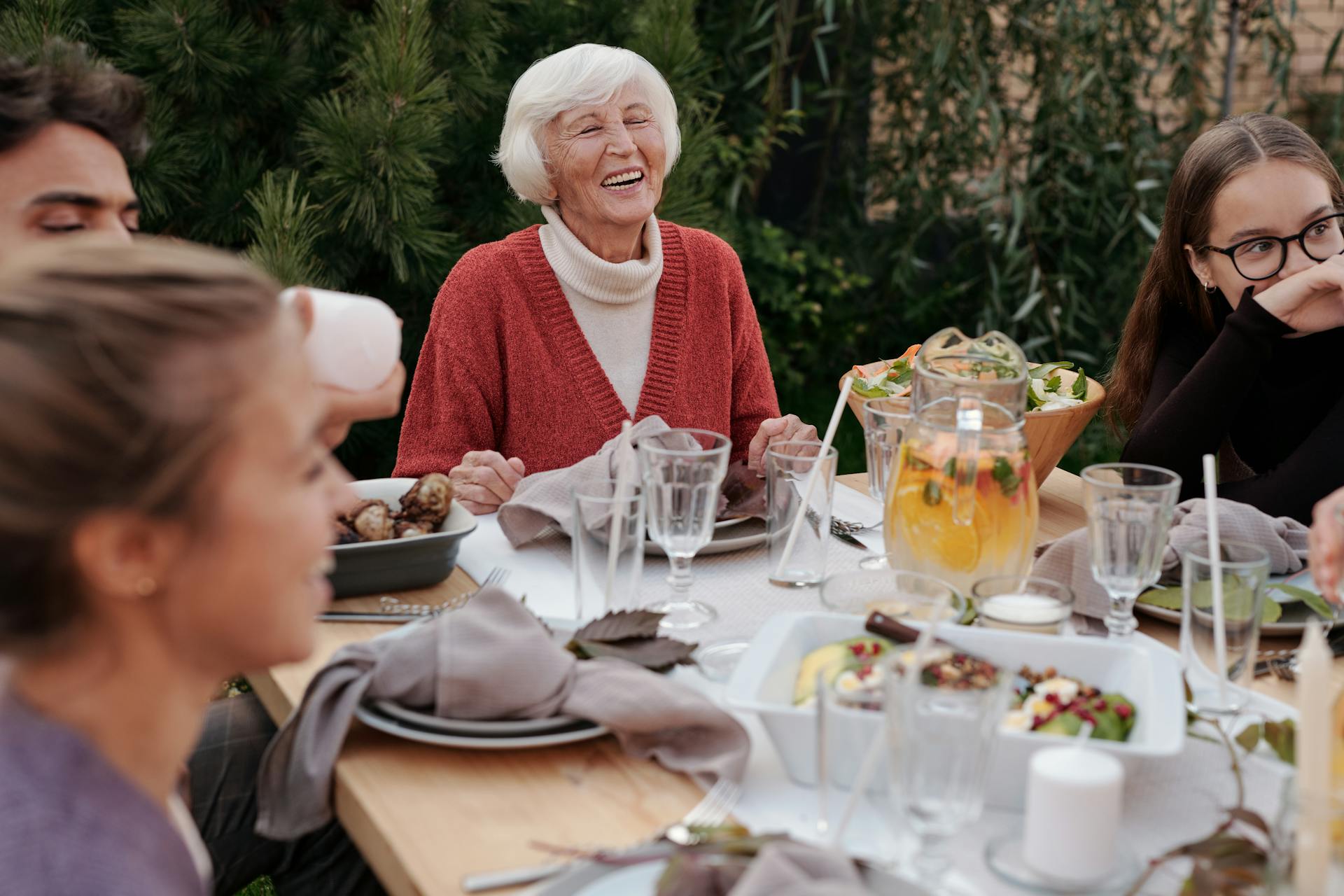
  • Community means for us to share responsibility and combine skills.
  • Living, working, and supplying are organized so that cooperation becomes a matter of course.
  • Common spaces, workshops, and gardens promote exchange, learning, and mutual support.
  • Involving the local population, knowledge, and exchange
  • This creates social stability, which is just as important as ecological stability.

Building with nature

​Building materials that have been used for centuries are combined with modern technology. This creates resource-efficient buildings made of natural materials. Walls made of loam and straw bales are combined with wood and lime to form resistant houses. This type of construction regulates heat and cold in a natural way and creates long-lasting, comfortable living spaces.
Also, in our buildings, the approach is: less is more. Through optimized geometry, we reduce the need for heating and cooling energy. The living comfort should still be high and the equipment in good standard. The buildings are created under the highest demands on building biology. Healthy for us and nature.

Reference object
 Chat now